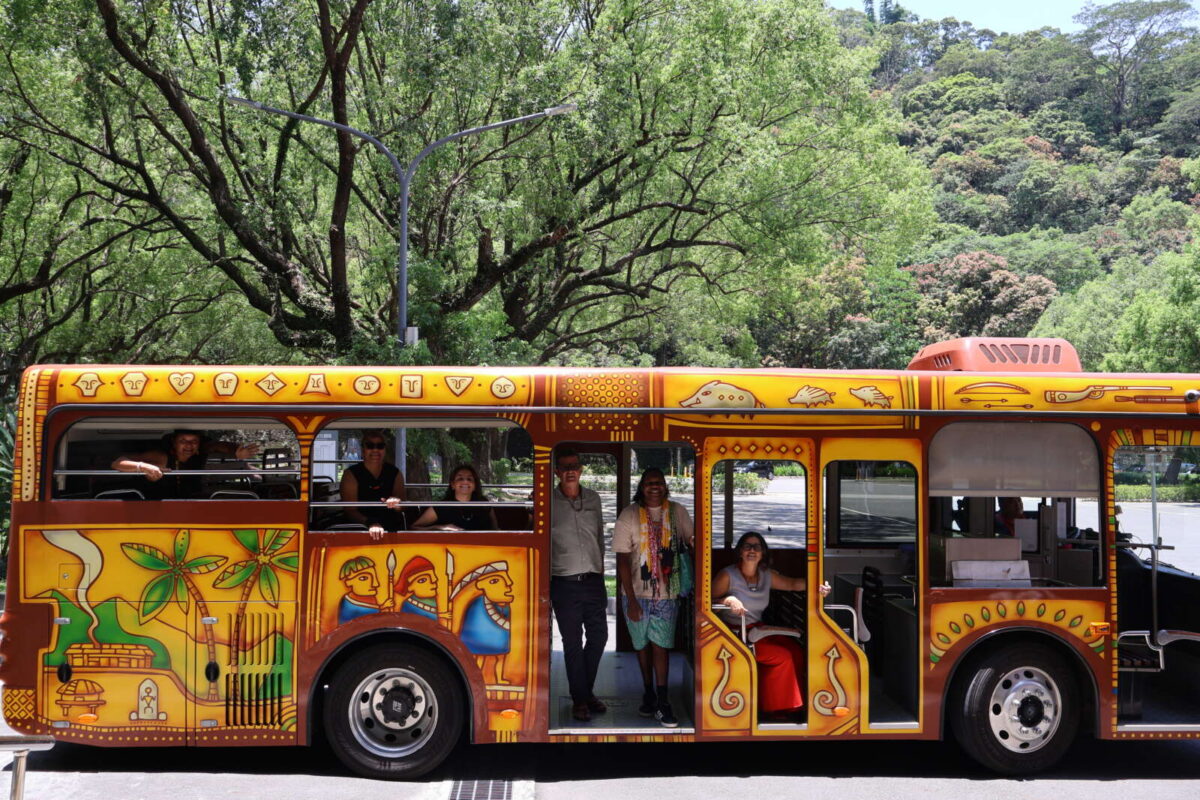
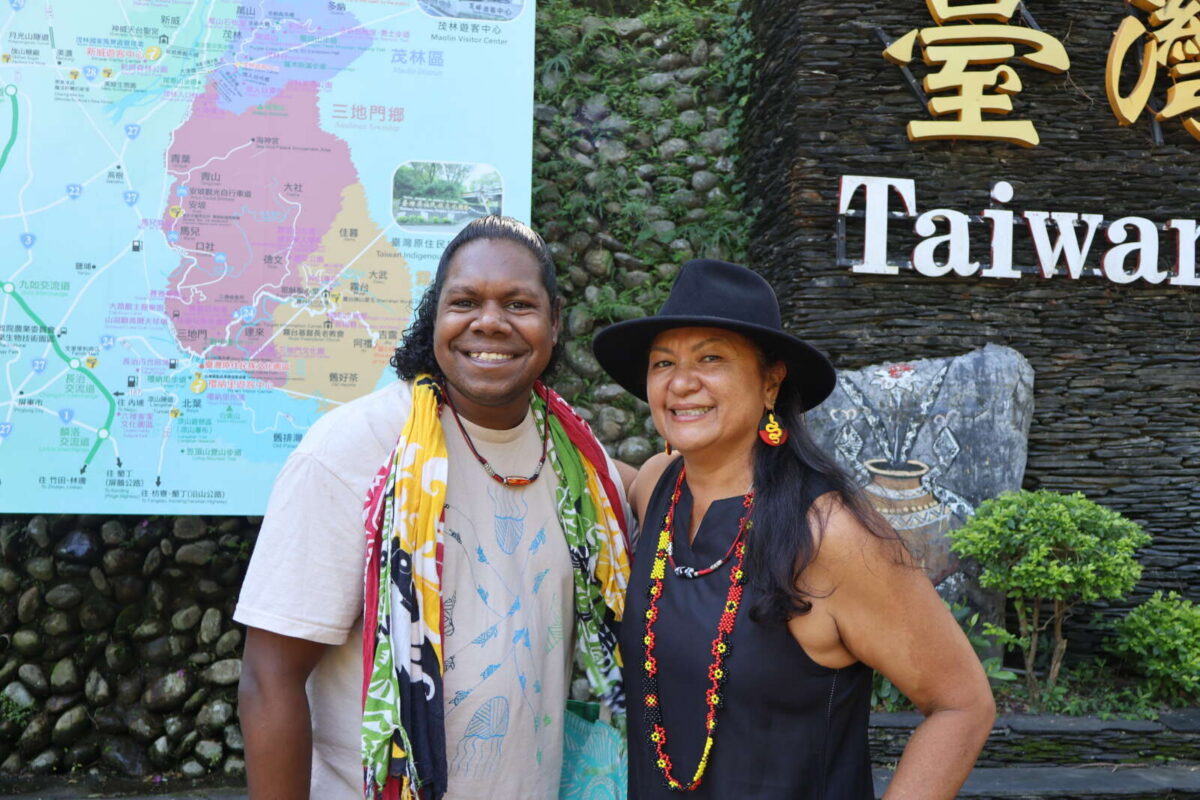
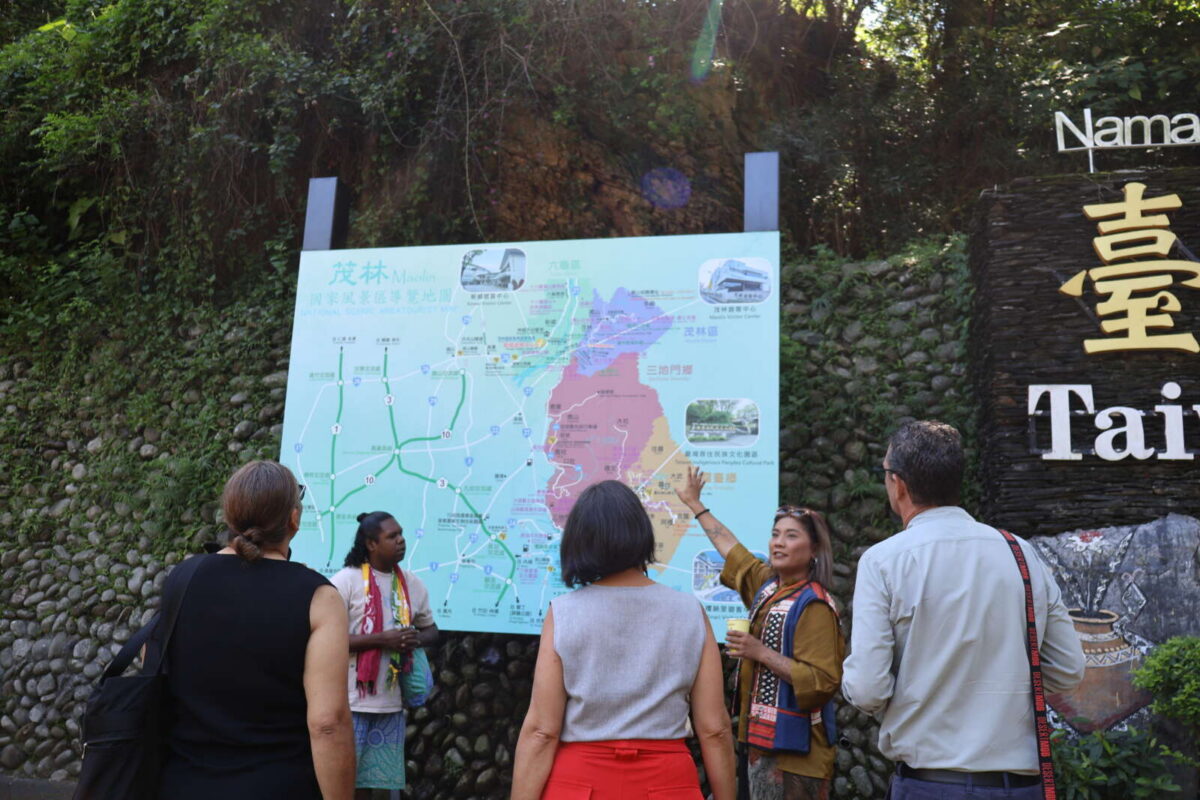
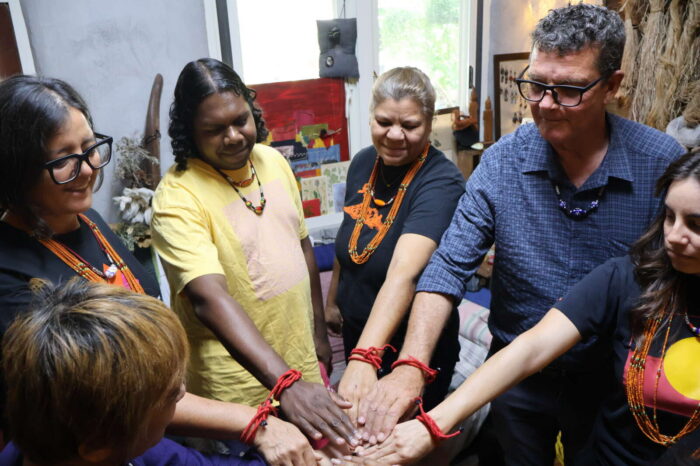
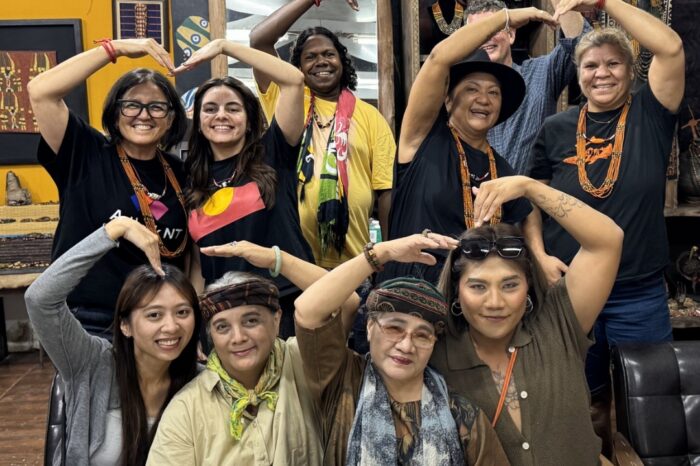
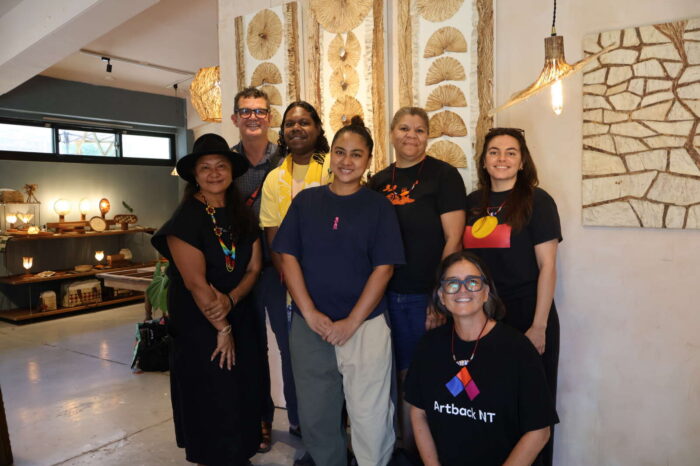
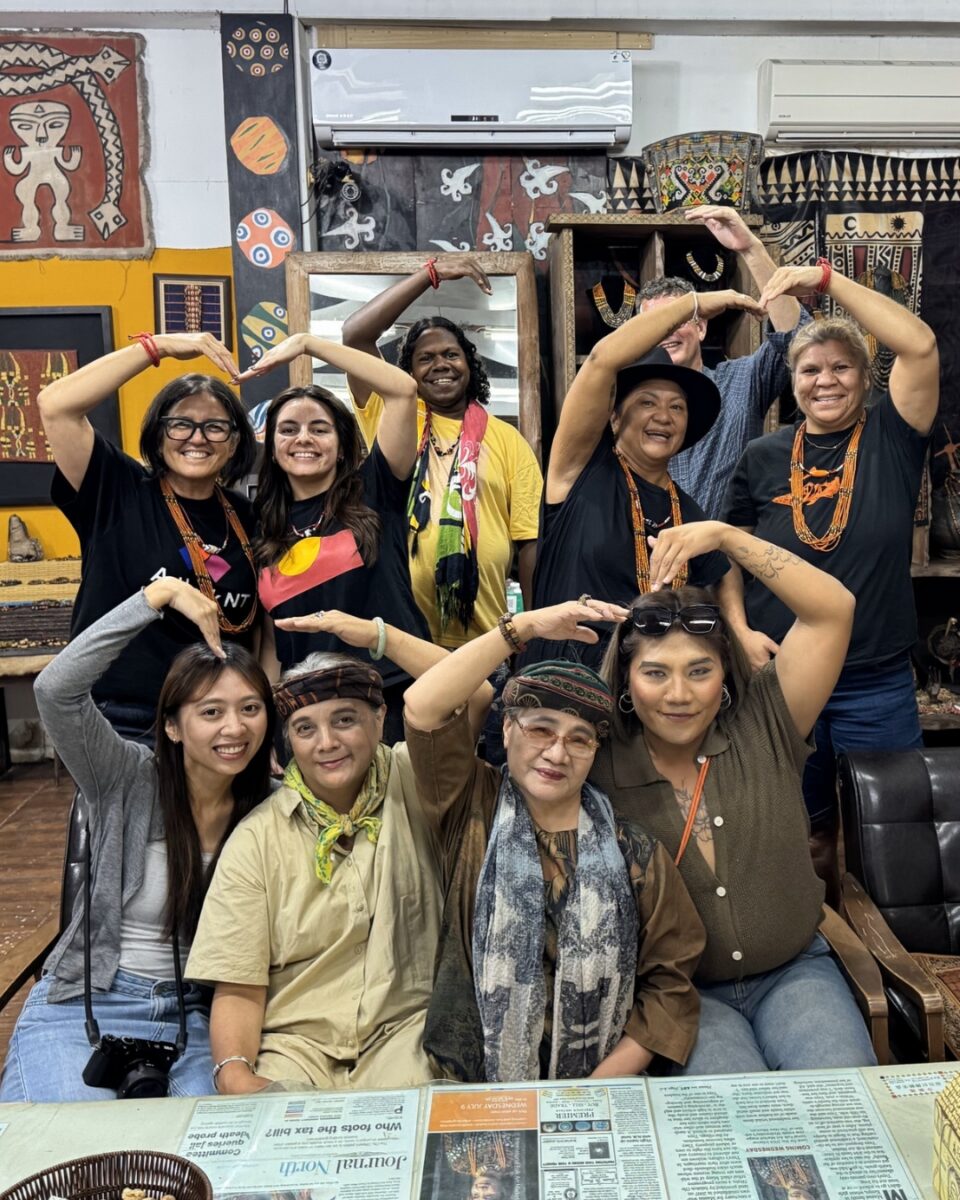
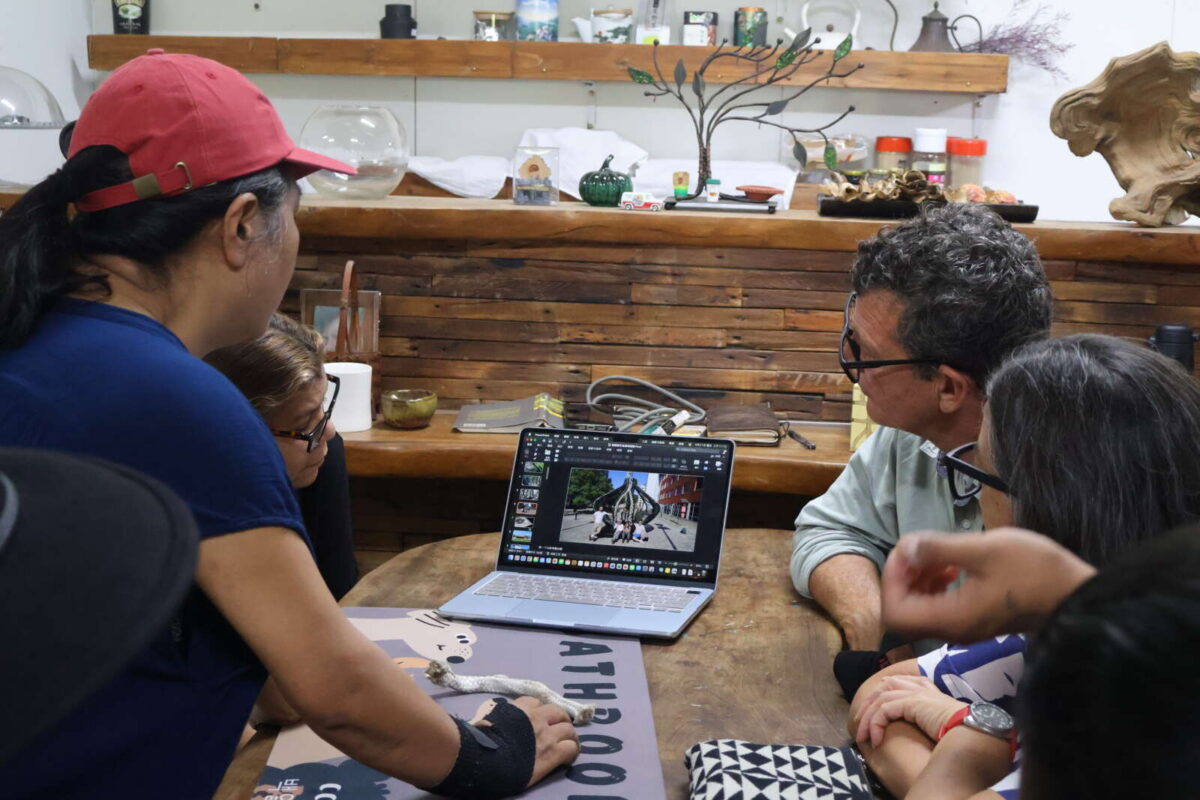
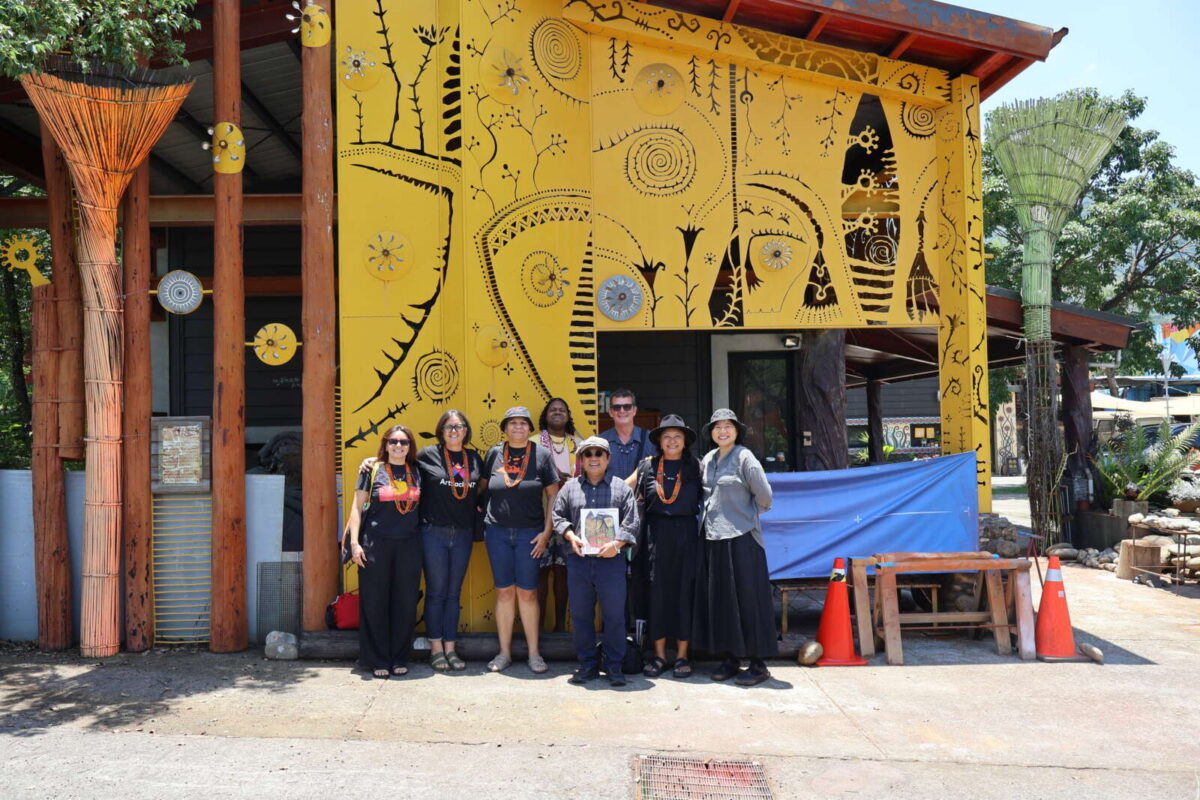
In June, we led a First Nations International Partnerships Bi-lateral Delegation to Taiwan. A seven-day exchange that brought together First Nations arts leaders from the Northern Territory and Indigenous Taiwanese artists, cultural workers and organisations.
Travelling from 17–24 June, the delegation moved through Pingtung, Taitung, Hualien and Taipei, visiting artists, studios, galleries, cultural institutions and performance spaces. Across the week, delegates were welcomed into places where culture is actively held, practised, taught, protected and reimagined.
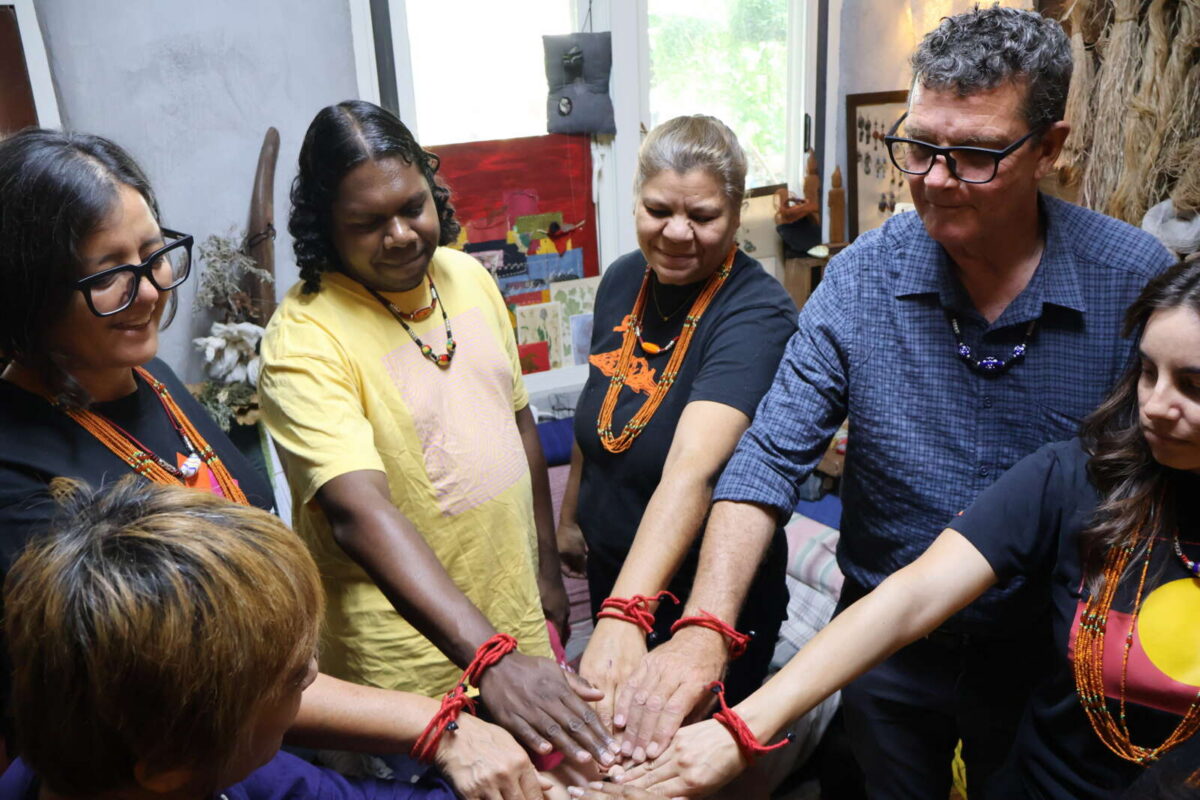
The power of coming together
For Artback NT CEO Michelle Bell, who joined the delegation alongside our Tour Producer – Performing Arts, Tahlia Biggs, the trip was another powerful reminder of what can happen when people are brought together with intention.
“Bilateral delegations and exchanges have been around for a long time. This trip is evidence of their power and ability to connect hearts and minds. These intentionally designed face-to-face gatherings inspire people. And that is key to strengthening our sector.”
– Michelle Bell
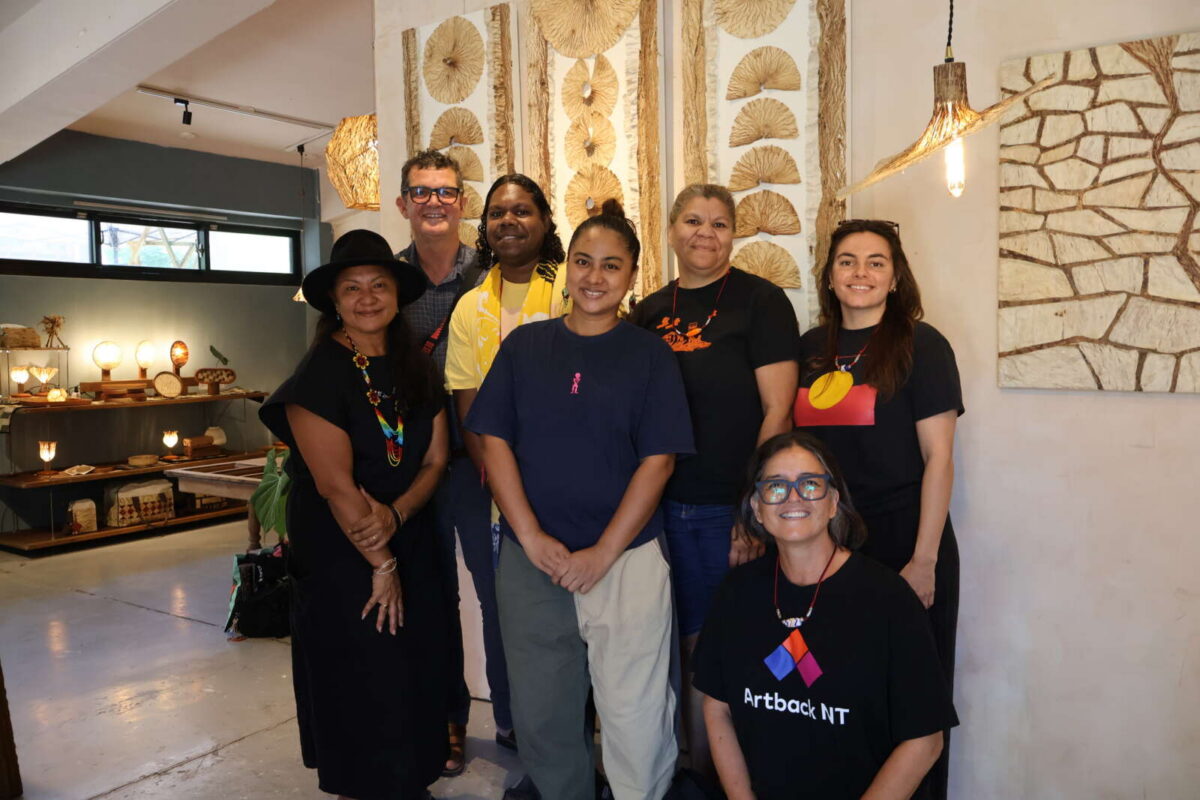
The NT delegation also included Nadine Lee, Founder of Birrimi Creations and Chairperson of the Darwin Aboriginal Art Fair Foundation; Marisa Maher, Artback NT Board Member and Manager of Iltja Ntjarra Many Hands Art Centre; Colin Puruntatameri, artsworker with Jilamara Arts and Treasurer of ANKA; and Philip Watkins, CEO of Desart.
Cultural keeping places
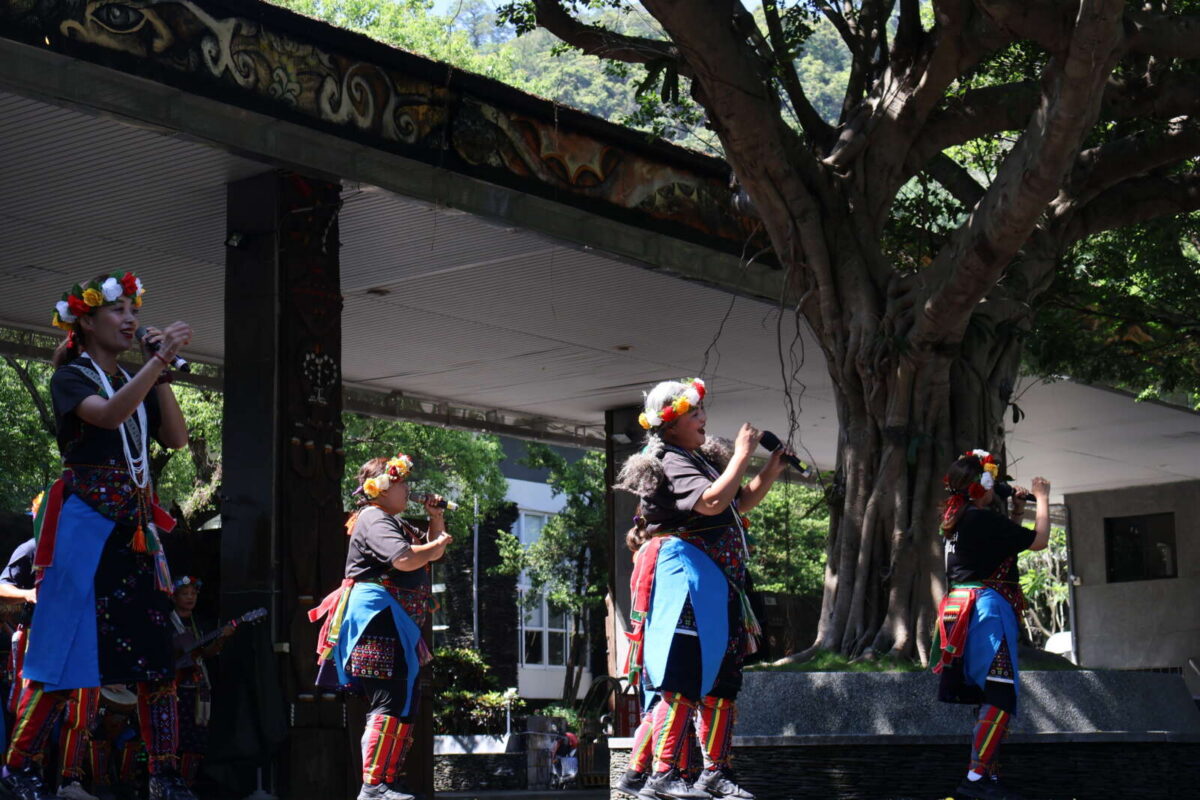
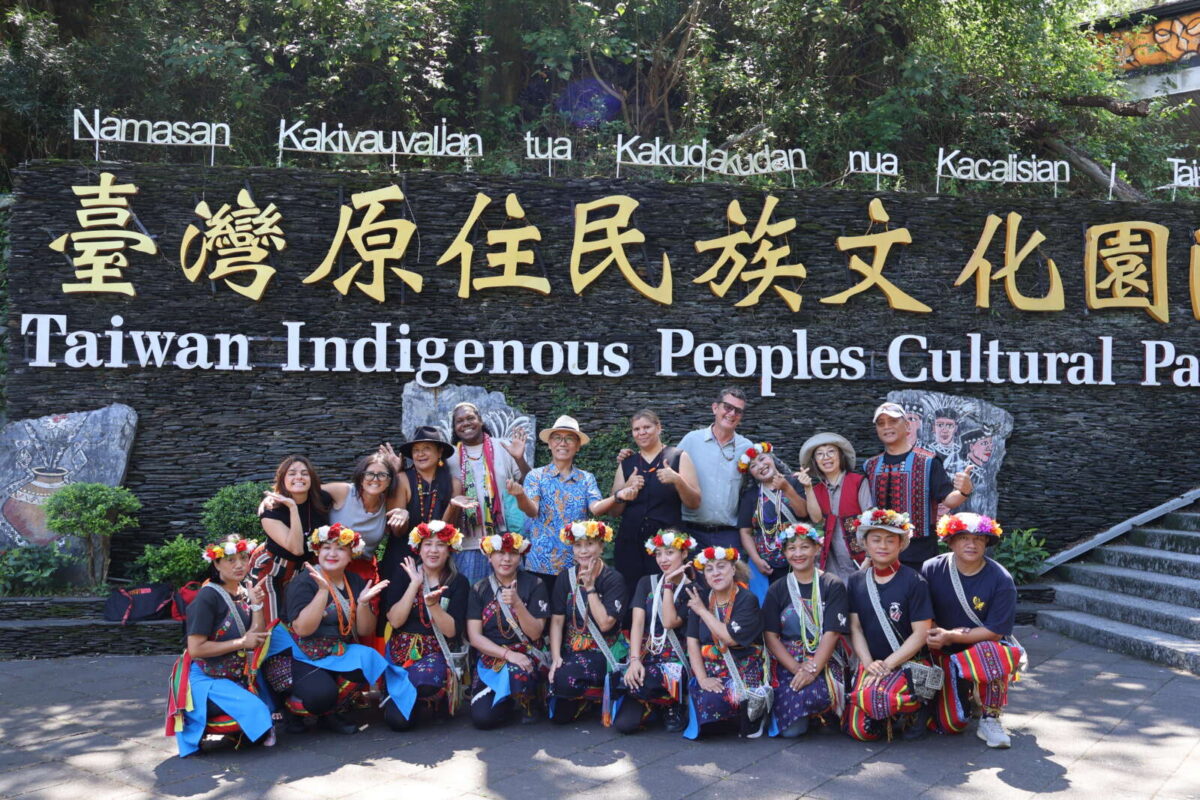
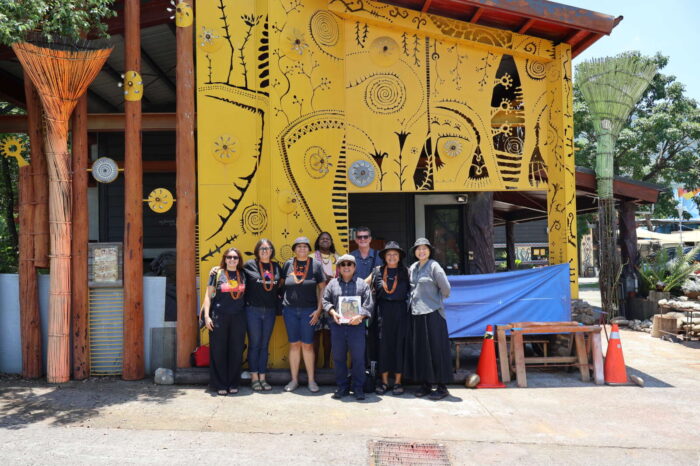
The delegation began at the Taiwan Indigenous Peoples Cultural Park, an 80-hectare precinct dedicated to celebrating Taiwan’s Indigenous peoples. For the NT delegates, it offered a powerful example of a cultural keeping place, somewhere designed to preserve and present culture, supporting intergenerational knowledge sharing.
“It’s such a spectacular setting dedicated to celebrating the Indigenous peoples of Taiwan, cultural maintenance and education.”
It helped Michelle see where the gaps might be in Australia, where they could learn from what’s happening in Taiwan, what to implement, and how to learn from each other.
Artists, practice and place
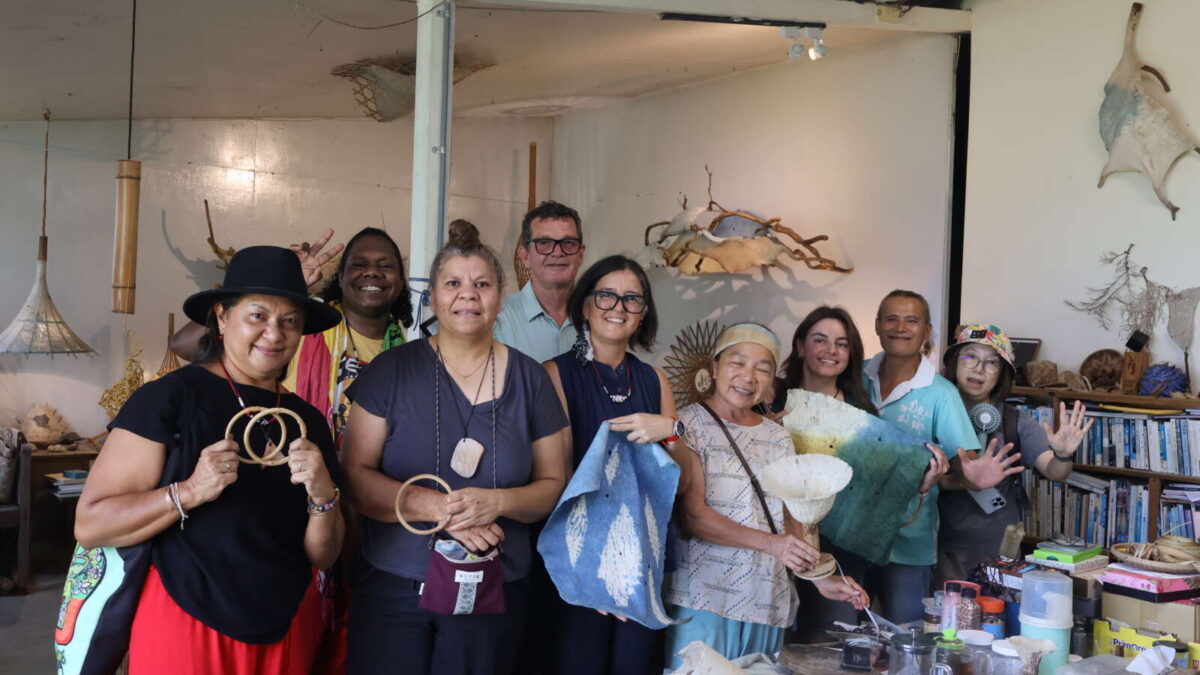
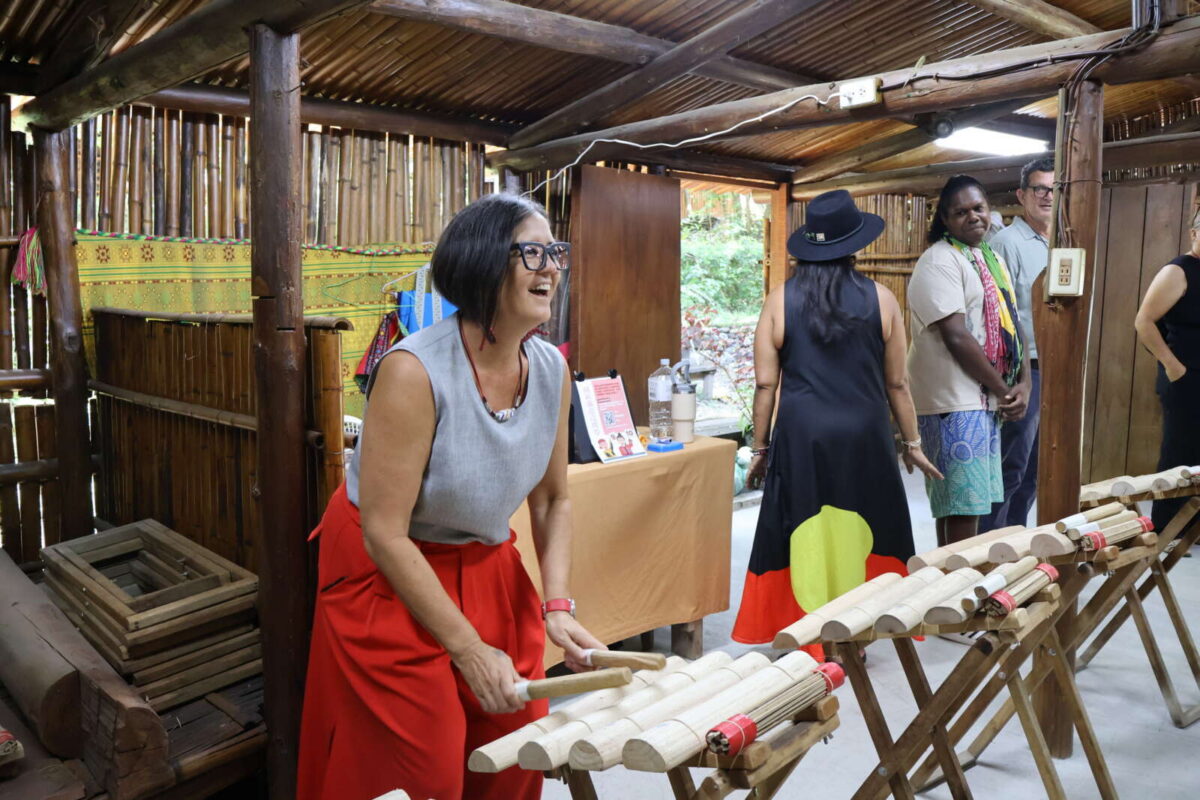
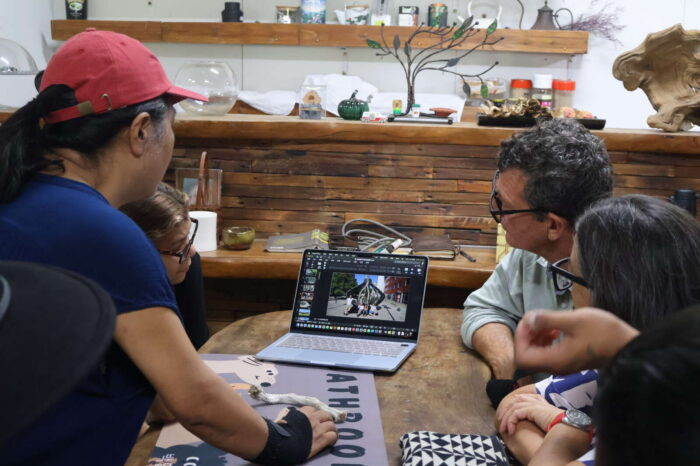
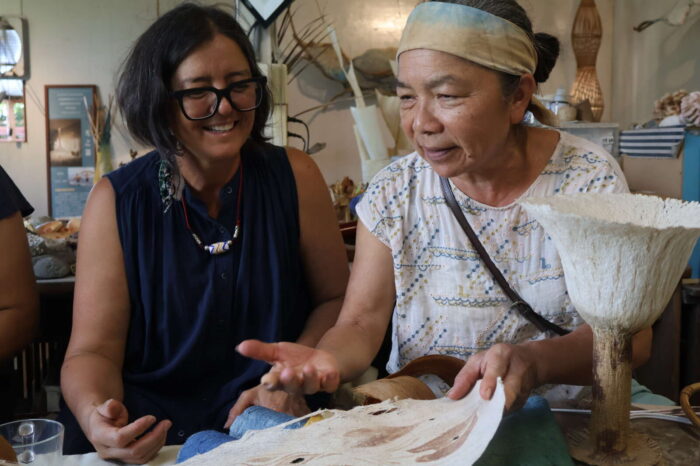
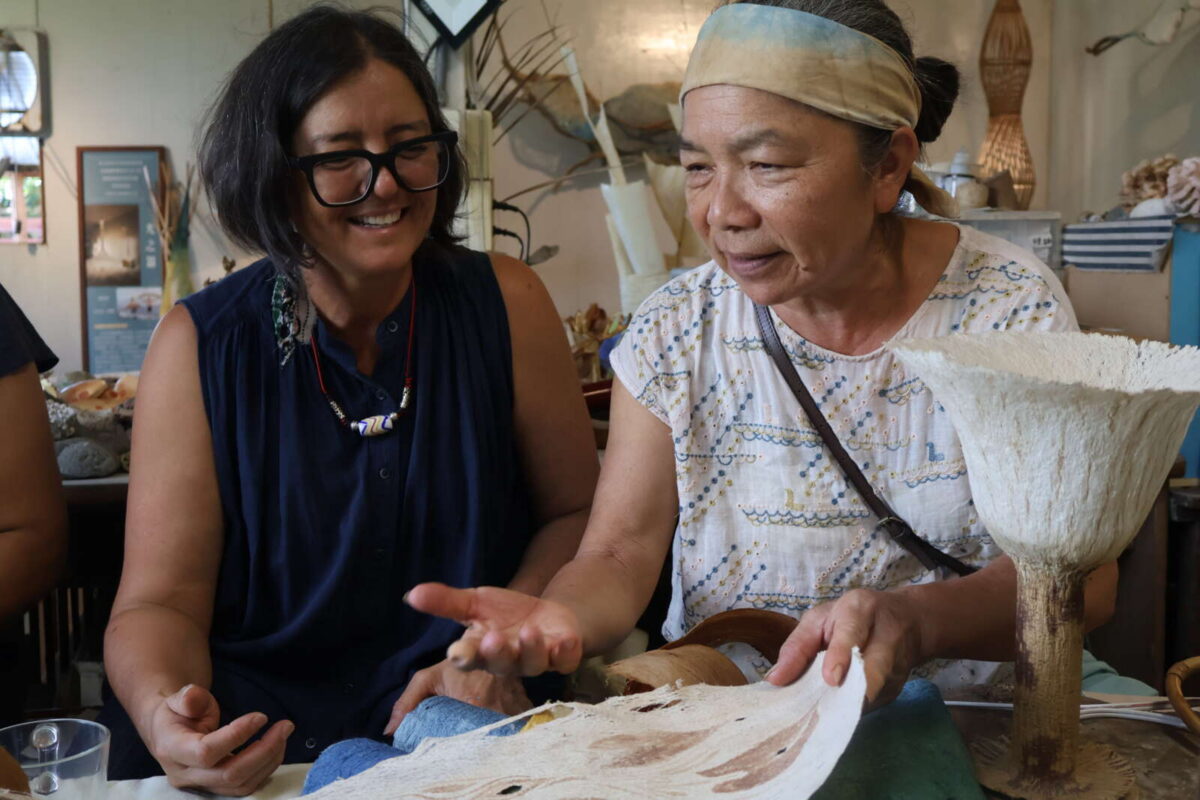
Throughout the week, the group met artists whose practices carry deep cultural knowledge while speaking urgently to contemporary life. They visited Lumamiling, known for preserving the traditional practice of paper mulberry bark cloth making; spent time with multidisciplinary artist Etan Pavavalung and his partner Grace; and met artist Aruwai Kaumakan, whose large-scale textile works are shaped by her work alongside women in community, including those displaced by natural disasters.
They also visited the Paiwan Three Treasures Craft Gallery, where knowledge of Paiwan glass beads, ceramic pots and bronze knives continues to be preserved and taught; met internationally recognised installation artist Eleng Luluan in Taitung; spent time with Bulareyaung Dance Company; attended the Moonlight Sea Concert by the ocean; and travelled through Hualien County to meet further artists working across fibre, bamboo, rattan, clay and contemporary design.
What emerged across these visits was recognition. Different lands, different histories, different languages and practices, yet again and again, delegates encountered artists using creative practice to hold knowledge, strengthen identity, respond to trauma and imagine futures.
Michelle described the privilege of being able to experience the exchange “through an Indigenous-to-Indigenous lens”, and of seeing how art continues to operate as a universal language.
“Hearing first-hand how practice by different studios is being used to heal from the traumas of typhoons and colonisation was incredibly moving. It made me wish those who dismiss the arts as a ‘nice-to-have’ could feel the power of these practices in action.”
Beyond one organisation
For Artback NT, the exchange also affirmed something much bigger than one organisation, one trip or one program.
While the organisation has played a pivotal role in facilitating this framework for exchange, the real impact lies in what grows from the relationships formed, between artists, organisations, communities and future collaborators.
“This project has evolved into something much bigger than us,” Michelle said. “It’s true we are the facilitators of a framework that will allow for artistic exchange. However, what grows out of these connections and introductions has the potential for much deeper and wider-reaching engagement beyond the offices of Artback NT.”
Looking ahead
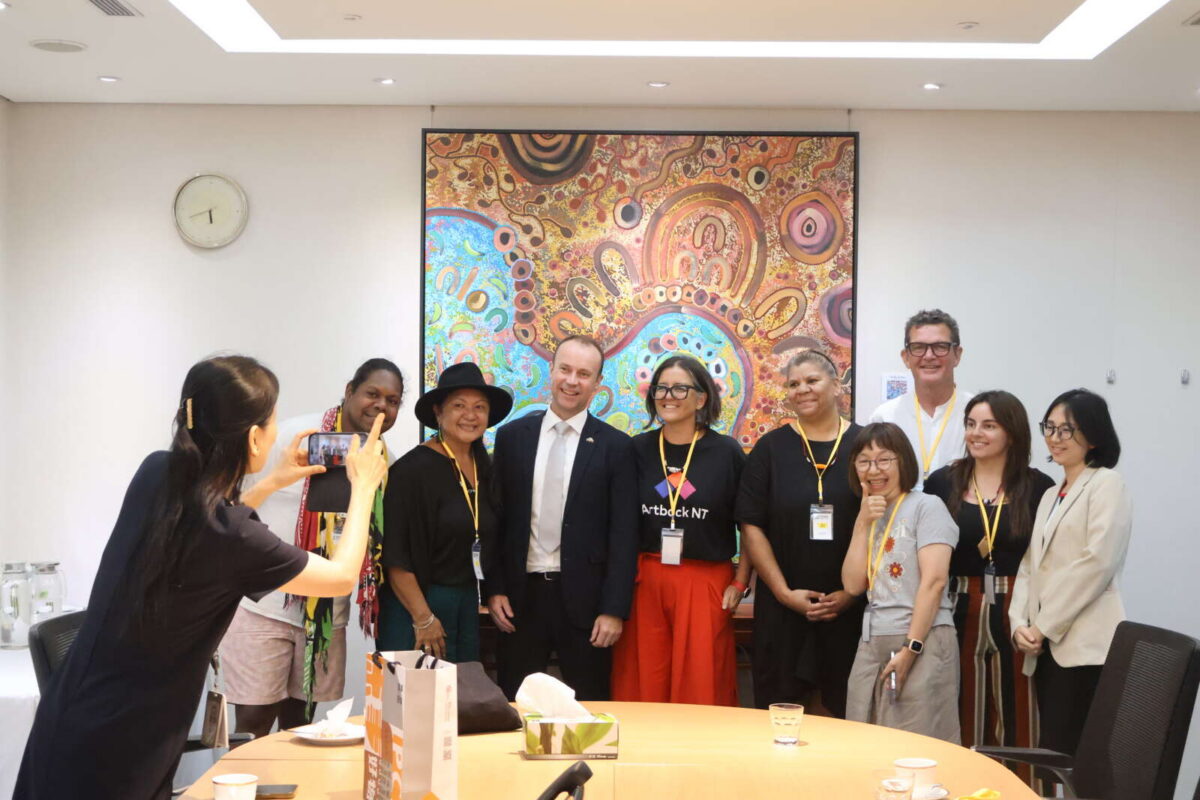
The delegation finished in Taipei with a visit to the Shung Ye Museum of Formosan Aborigines and a meeting with Deputy Representative Dan Stuart at the Office of Australia (Taipei), where delegates reflected over lamingtons on the relationships strengthened across the week and the opportunities ahead.
The delegation meet with Deputy Representative Dan Stuart at the Office of Australia (Taipei) on their last day.
Michelle shared some final reflections:
“I can only hope these connections grow and snowball for each of the delegates and their organisations, and for the greater NT creative industries. If Artback NT can open the door for others to step through then, while we have the opportunity, we will continue to open those doors for others. We are proud to be in the background fostering the relationships to create the conditions that make new creative exchanges possible.”
Supported by the Australian Government through the Department of Foreign Affairs and Trade’s First Nations International Fellowships and Partnerships Grant Program, alongside funding from the Indigenous Peoples Cultural Development Center, Council of Indigenous Peoples, the exchange forms part of a program of cultural collaboration between the Northern Territory and Taiwan. The Northern Territory Government has also committed funding through its Strategic Initiatives and Partnerships Arts Grants program to support the Taiwan Artists Exchange program from 2026 to 2028.
Artback NT acknowledges the Custodians of the lands on which we work and travel, and whose sovereignty was never ceded. We pay our respects to Elders and their continuing connection to land, water, community, and culture. This was and always will be Aboriginal land.