From Rinari to Garma: The journey of Gapu Ŋupan
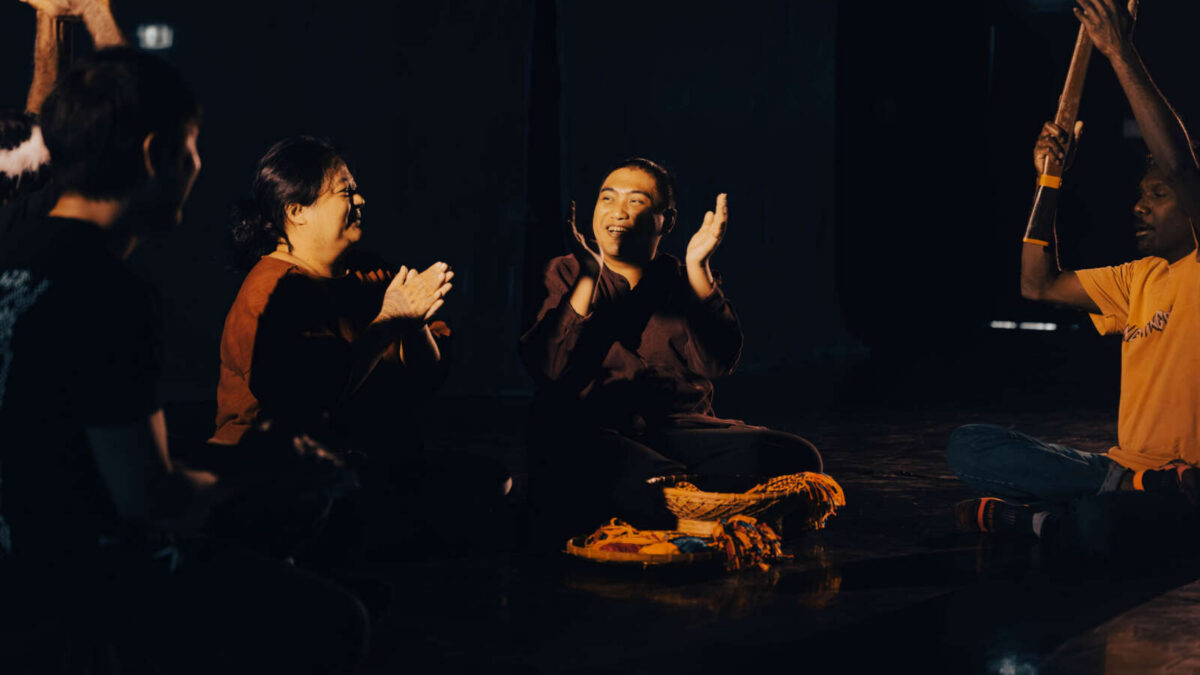
What began with a six-week residency in a Taiwanese mountain village has grown into a major First Nations collaboration. And this August it comes home to the NT.
In 2018, dancer and choreographer Rachael Wallis travelled from North East Arnhem Land to the mountain village of Rinari in southern Taiwan.
She expected to spend six weeks sharing dance, learning from local artists and exploring new ways of working. She could not yet have known that the relationships formed there would help spark a production that would continue growing for the next eight years.
This August, that production, Gapu Ŋupan, will be performed at Garma Festival on Yolŋu Country and will then open Darwin Festival. Cast and crew members from Taiwan begin to arrive this week.
For Rachael, this is the fulfilment of a hope that has existed since those earliest days of exchange.
“We all wanted to be able to present our work at home,” she says.
Where the connections began
Rachael travelled to Rinari through the Taiwan–Australia Indigenous Artist in Residence Program, a partnership between Artback NT and Taiwan’s Indigenous Peoples Cultural Development Center which continues today.
Set high in the mountains, Rinari was, in Rachael’s words at the time, “like a little mountain paradise”.
The residency immersed her in a community rich with visual artists, musicians, singers, dancers and cultural practitioners. It also changed the way she thought about her own practice. She reflected in 2018:
“I’d always kept it separate. ‘I’m a dancer, you’re a weaver, you’re a painter.’ But actually, we’re all doing cultural work and we’re all telling stories and bringing our ancestors into our works.”
One collaboration emerged so quickly that Rachael was astonished by what the artists achieved together.
“It just fell into place,” she said. “When Indigenous people perform, you’re not doing it for yourself and you’re not doing it alone.”
The residency showed what was possible. It also planted a larger dream: to bring families and artists from Taiwan and North East Arnhem Land together.
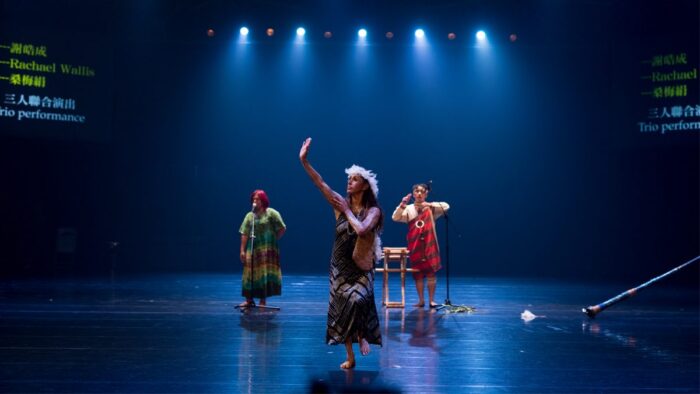
From Rinari to remote collaboration
Among the people Rachael met was Paiwan Songwoman and cultural consultant Seredau Tariyaljan.
“We actually lived together in the village for six weeks,” Rachael remembers.
“We became very close. Our dream was: how could we bring our people together?”
That dream became the beginning of Gapu Ŋupan.
The project developed gradually, with artists travelling, exchanging cultural knowledge and finding opportunities to spend time together. In 2020, another residency provided a chance to bring members of the Taiwanese creative family to Australia and begin shaping a work together.
Then the pandemic closed the borders. But rather than pause the collaboration, the artists worked remotely from their respective Countries. The Australian artists developed and filmed material to send to Taiwan; the Taiwanese artists created work and sent it back.
For Rachael, working this way had an unexpected strength:
“A lot of the time, we’re taken off Country and put into a studio box somewhere. But when you’re creating on Country, it’s just a better feeling. There’s a lot more flow in our work.”
Material documenting that period of remote creation was later preserved by the National Museum of Australia as part of its record of artists continuing to create during COVID.
Working together over time
Gapu Ŋupan was created over five years of cross-cultural collaboration, bringing together Yolŋu songlines from North East Arnhem Land with storytelling from Paiwan and Amis cultures of Taiwan.
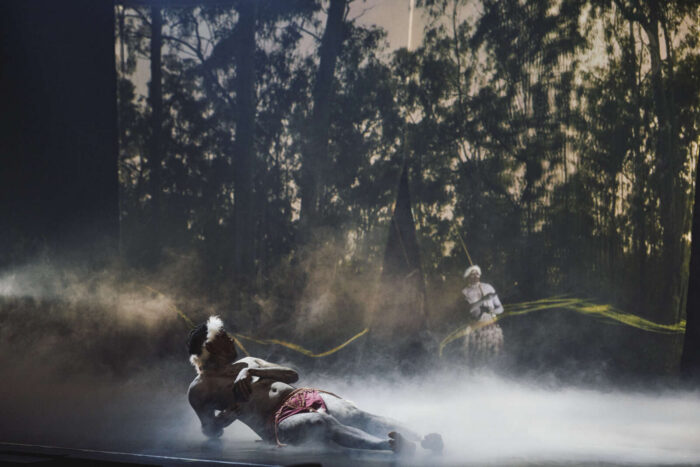
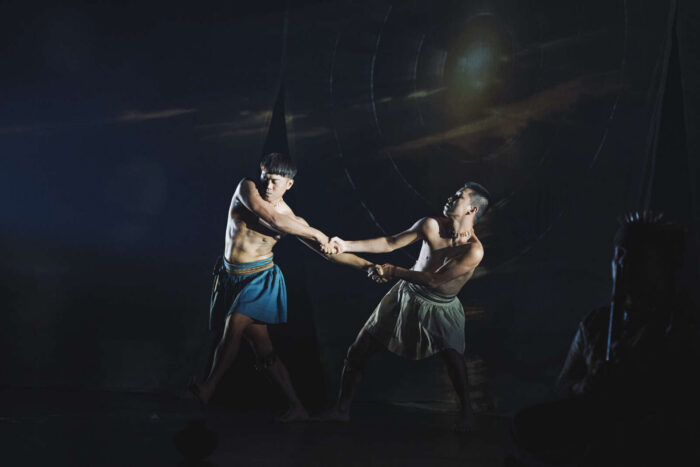
The work combines traditional and contemporary dance, live music and song, large-scale video and intricate handmade costuming. It moves between direct storytelling and abstraction, using bodies, sound, paintings and imagery to evoke people, histories and places.
But the time spent together matters as much as the final form:
“Working over such a long time gave us the opportunity to really get to know each other. We almost know exactly how each other works now. That’s the specialness of working over a long time for this slow-burn project.”
The relationships within the Australian creative team also reach back decades.
Rachael has known Gapu Ŋupan’s Rirratjiŋu Cultural Director and Songman, Banula Marika, for almost 30 years. After her time with Bangarra Dance Theatre, she moved to North East Arnhem Land, where she taught dance for 15 years and raised her daughter.
Over time, artistic relationships became family relationships as Rachael and Banula now share grandchildren.
“These stories that I’m telling and sharing are actually the stories for my grandchildren,” Rachael says.

Taking audiences to Country
Large-scale video by artist Samuel James is also central to the performance.
Filmed on the artists’ Countries in North East Arnhem Land and Taiwan, the projections do more than provide a theatrical backdrop. They allow the performance to carry audiences into places that many will never have the opportunity to visit.
“The video is a very important part of the show because it takes our audiences to our Countries,” Rachael says.
“Not many people get to go there. Even when people visit Taiwan or Australia, they don’t necessarily get to those traditional places. It’s very special that we can share that.”
The production begins by introducing origin stories from each culture. From there, it explores cultural knowledge, histories and shared struggles, including the ongoing impacts of colonisation on First Peoples.
Yet its focus is not only on what has been endured. It is also about what becomes possible when cultures work alongside one another.
“Working together really empowers us and feeds our pride in culture. It gives deep nourishment in spirit and connection for a shared future vision.”
A dream returning home
Before Gapu Ŋupan had its world premiere at Asia TOPA in Naarm / Melbourne, the artists had imagined presenting it first within their own communities.
But funding considerations and the practical realities of mounting a large international production meant that the journey unfolded differently.
And the Asia TOPA season placed the new work before large audiences in one of Australia’s major performing arts venues. It also included a performance for school students who had studied the production through an education resource.
Rachael remembers the students’ curiosity about the songs, dances, costumes and cultural traditions, and the standing ovation they gave the artists.
“That was a really good memory for me,” she says. “How interested they were, and then giving us the biggest cheer.”
Now the work is making the journey the artists always wanted it to make.
At Garma Festival, it will be performed on Yolŋu Country, close to the families, cultural knowledge and songlines at its heart. At Darwin Festival, Territory audiences will have the opportunity to see the full production following its acclaimed premiere.
The Garma performance also brings Rachael’s story full circle. At the end of her 2018 residency, she spoke about returning home, sharing what she had learned and working towards performances at Yirrkala, Garma and local festivals. Eight years later, that possibility has become reality:
“We’re really, really grateful to everybody who has supported us along the way. That support means we actually get to take this show home.”
And the exchange continues. Artists and arts professionals from Taiwan will be in the Northern Territory during the season, including people linked to the residency program that first brought Rachael to Rinari. A further artist exchange will take place in 2027. And plans are also developing to take the production home to Taiwan. Watch this space.
Catch Gapu Ŋupan in the NT
Gapu Ŋupan at Garma Festival
1 August 2026
Gulkula, North East Arnhem Land
Garma is sold out.
Gapu Ŋupan at Darwin Festival
5–6 August 2026, 7pm
INPEX Sunset Stage, Civic Park
Tickets available here through Darwin Festival.
This project is created and produced by Miku, Hui Jia Creatives, Kath Papas Productions, and Artback NT. The NT tour is supported by Garma Festival, Darwin Festival, Rirratjingu Aboriginal Corporation, Ministry of Culture Republic of China (Taiwan), Indigenous Languages and Arts, and Creative Australia.