Finding common ground: Taiwan delegation reflects on Top End trip
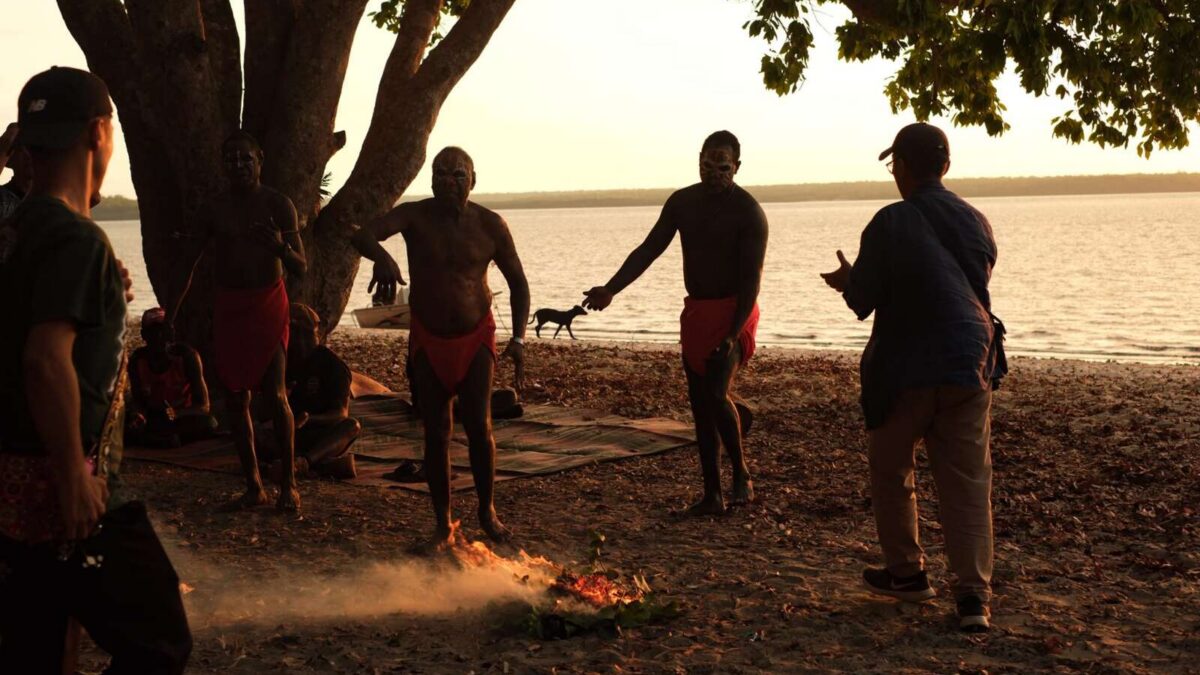
In August, our friends from Taiwan’s Indigenous Peoples Cultural Development Center (IPCDC) arrived in the Northern Territory for a packed week of art, culture, and conversation.
The seven-person delegation visited Garramilla / Darwin and the Tiwi Islands from 4–11 August, returning the hospitality extended to a group of Northern Territory arts leaders who travelled through Taiwan earlier this year.
Led by IPCDC Director-General Giljegiljaw Pakedavai, the delegation included Program Manager Yuling Chou, translator Baru Elutu Pavavalijung and dancers Lo Kuan-Chien, Hsu Hung-Wei, Ciwas Takyo and Yen Kai-Hsin.
Their visit landed at one of the busiest times in the Top End cultural calendar. Over the course of the week, the group experienced the opening of the Darwin Aboriginal Art Fair, the National Indigenous Music Awards, the Telstra National Aboriginal and Torres Strait Islander Art Awards and, of course, the opening night of Gapu Ŋupan (Chasing the Rainbow) at Darwin Festival.
But between the major events were just as many meaningful moments, from meeting schoolchildren on the Tiwi Islands to sharing dances beside the water as the sun went down.
A Garramilla / Darwin welcome
For IPCDC Program Manager Yuling Chou, there was a sense of finally arriving somewhere she had heard about for years.
Since the cultural exchange between Taiwan and the Northern Territory began in 2018, Taiwanese artists returning from Australia had repeatedly told her: “You have to go.”
“So, this August, I finally made it here myself,” Yuling said.
Darwin Festival was one of the highlights of her visit.
“What I’ve discovered is that Darwin, and Darwin Festival in particular, has such a leisurely, relaxed atmosphere.”
From an arts administration perspective, she described the festival as ‘extremely successful’ and said the visit provided ideas and inspiration for future programming in Taiwan.
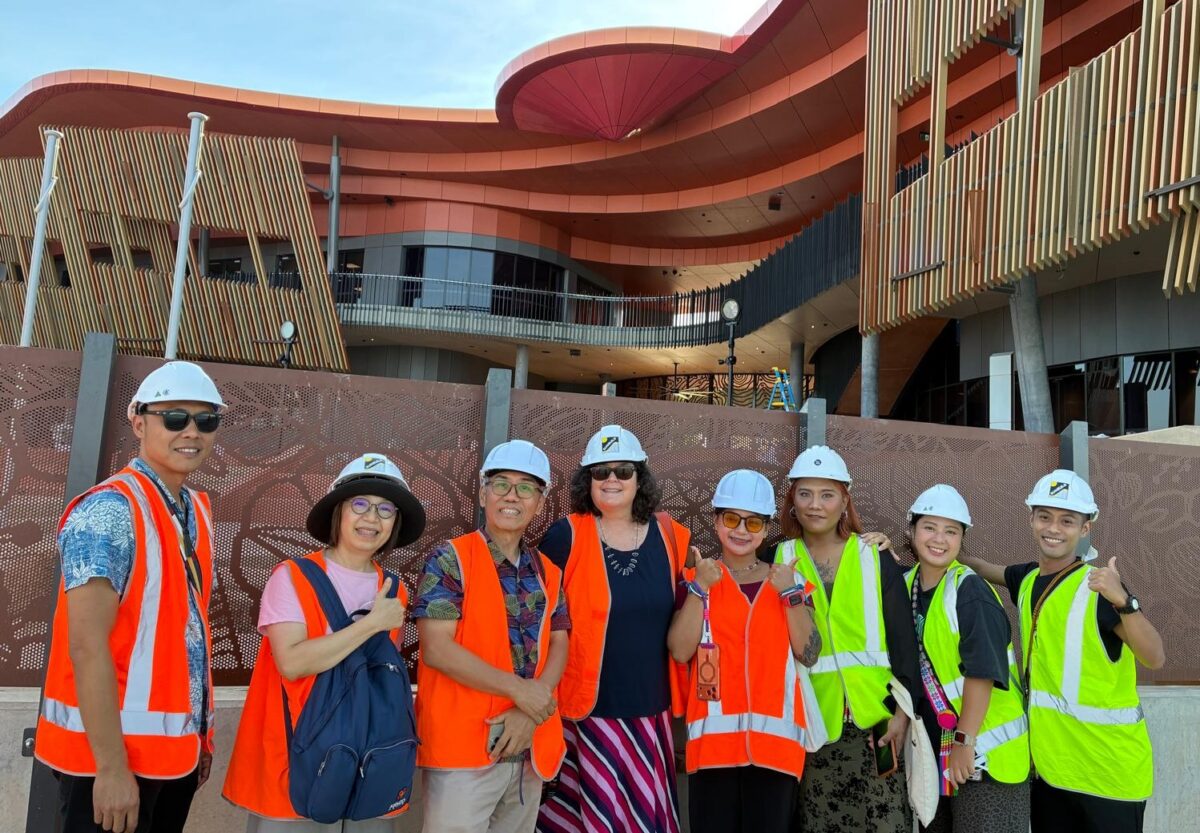
The delegation also visited the new Larrakia Cultural Centre, still in development, explored Darwin and its public art, met with Northern Territory arts organisations and joined artists, Elders, partners and government representatives for a reception at Government House.
For dancer Ciwas Takyo, the Larrakia Cultural Centre was one of the most memorable experiences of the trip.
“I felt that the people there showed such deep respect for the Traditional Owners and their culture, and that they were actively trying to recover and preserve everything connected to it,” she said.
“I could really feel how much effort people here have put into restoring culture, through the design of the place, the landscape, and all the details around it.”
Renewing a partnership
A significant moment in the week came beside the water at Jervois Park, where Artback NT and IPCDC renewed their Memorandum of Collaboration, reaffirming the organisations’ commitment to another three years of cultural exchange.
The partnership stretches back to 2018 and has already brought artists from Taiwan and the Northern Territory together through residencies, visits and collaborative projects, most notably Gapu Ŋupan, which brings Yolŋu songlines together with Paiwan and Amis storytelling, music and dance.
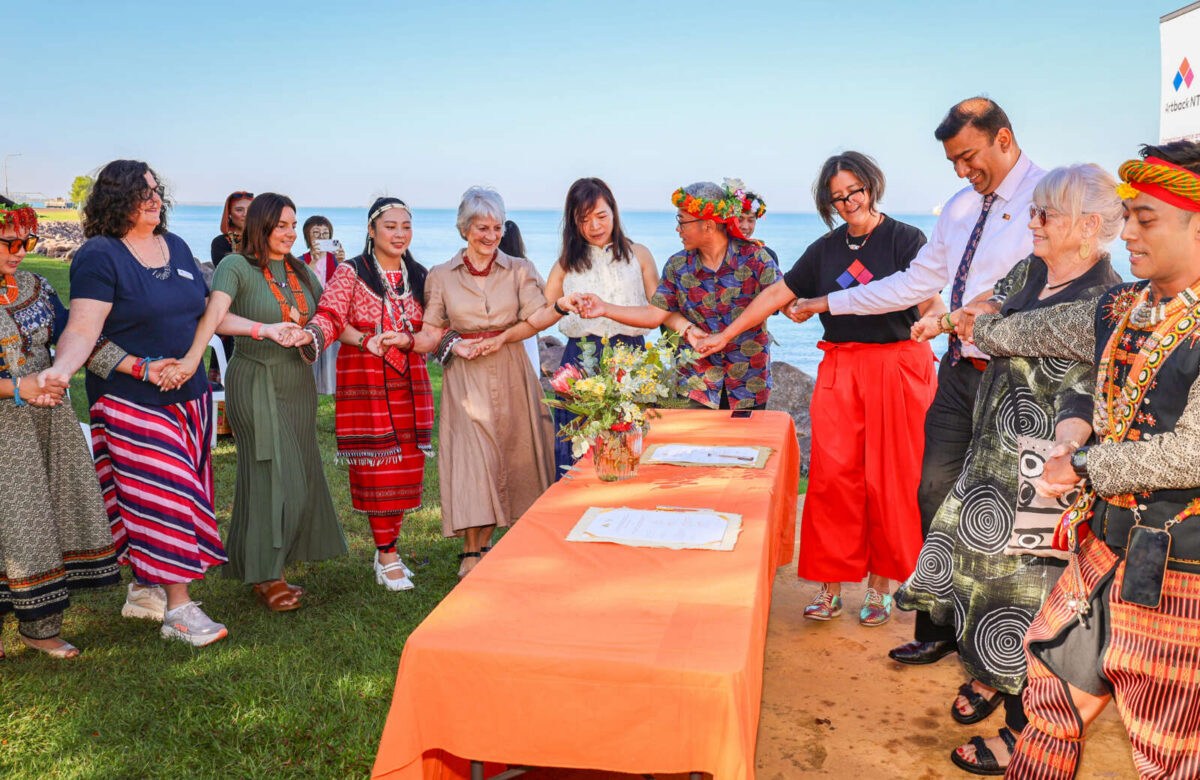
For Director-General Giljegiljaw Pakedavai, renewing the agreement was an opportunity to look ahead.
“I’m very happy that, during this visit, we were able to sign a Memorandum of Collaboration with Artback NT,” he said.
“We hope that from 2027 we can restart our reciprocal artist residency and cultural exchange program, and that the relationship between our two organisations will continue to grow stronger.”
Across the week, Giljegiljaw was also struck by the visibility and strength of First Nations art and culture in the Northern Territory, from the crowds engaging with Tiwi artwork to Darwin’s street art and murals.
“It made me feel that the support here for First Nations artistic creation is something we can learn from.”
Slowing down on the Tiwi Islands
The final two days of the delegation’s visit took the group across the water to the Tiwi Islands for an overnight stay.
After a thankfully smooth ferry crossing, Tiwi hosts Mamanta led the group through a cultural briefing where community members opened up conversations about Tiwi culture, kinship, family and cultural practices.
As people shared experiences, the group began finding similarities between Tiwi and Taiwanese Indigenous traditions, including practices around funerals and honouring those who have died.
Those conversations continued on the beach, where locally gathered fish, longbums and mud mussels were roasted over the fire. Local Elder Pirrawayingi led the Tiwi welcome through dance, before the Taiwanese visitors responded with dances of their own as the sun began to set.
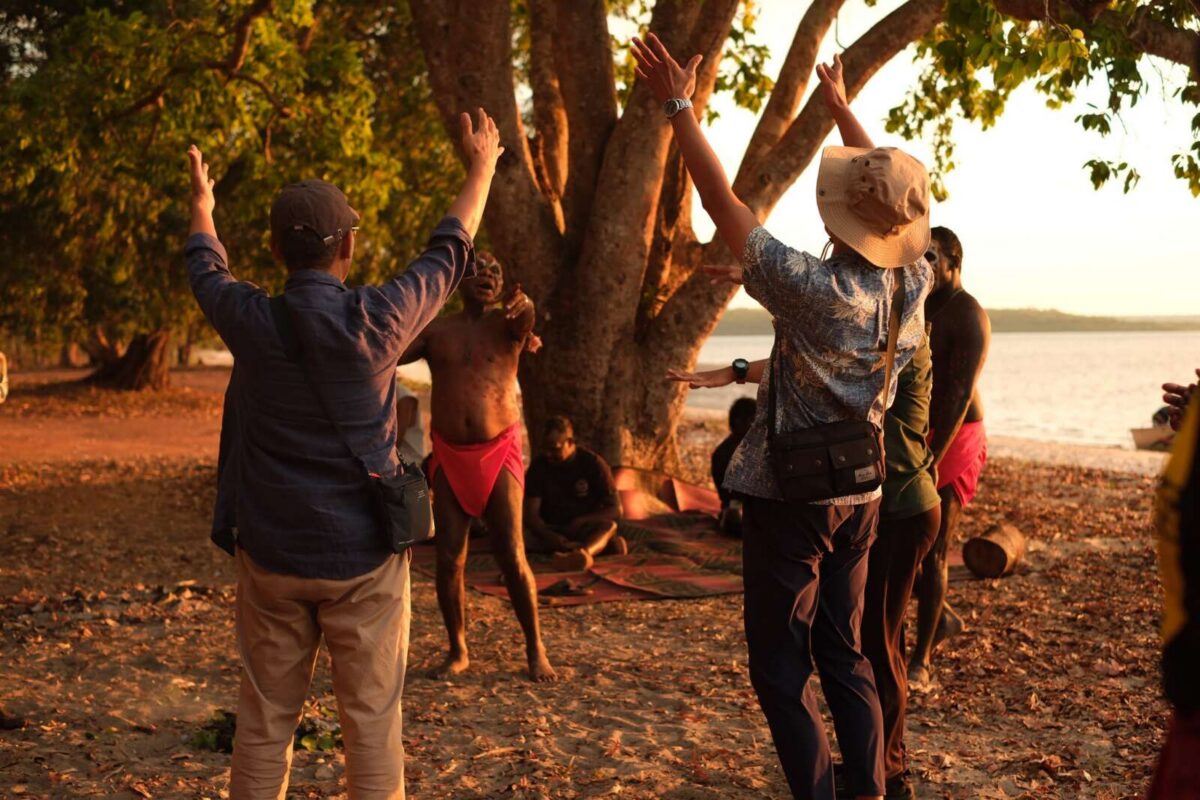
For performer Lo Kuan-Chien, the experience was memorable precisely because it required the group to change pace.
“When we entered the community, we slowed down our pace,” he said. “I felt that slowing down was itself a way of showing respect, respect for the community, and also respect for the land.”
What struck him most was seeing culture as something inseparable from daily life and Country.
“Their culture hasn’t simply been placed inside a museum. It lives with their breathing and follows their footsteps. It continues, slowly and naturally, to exist in that place. Walking there made us slow down and experience the place through our own footsteps, to really feel the land and observe how people live on it.”
Looking for what we share
The connections between First Nations experiences in Australia and Indigenous experiences in Taiwan became an important theme throughout the visit.
For dancer and musician Hsu Hung-Wei, visiting Australia for the first time created an opportunity to learn not only about culture, but also about histories of cultural and language loss and the work now underway to strengthen them.
“Their experiences have some similarities with those of Indigenous peoples in Taiwan, including periods when culture and language were interrupted or lost,” he said.
“What makes me very happy is seeing that these cultures are gradually being brought back, that people are reclaiming their languages, traditions and cultural practices.”
The Tiwi visit made those connections especially tangible.
“I think there are many things we can learn from one another,” Hsu said. “We share some similar experiences, and through exchanges like this we can understand each other better.”
Fellow performer Ciwas was similarly moved by the relationship between people, Country and ancestors.
On the Tiwi Islands, she noticed that when the group arrived somewhere new, their hosts would speak to the ancestors of that place, letting them know visitors had arrived.
“Seeing the efforts of First Nations people to reclaim and strengthen their culture has made me think that we also need to put in that same kind of effort if we want to recover more of what has been lost,” she said.
An exchange to remember
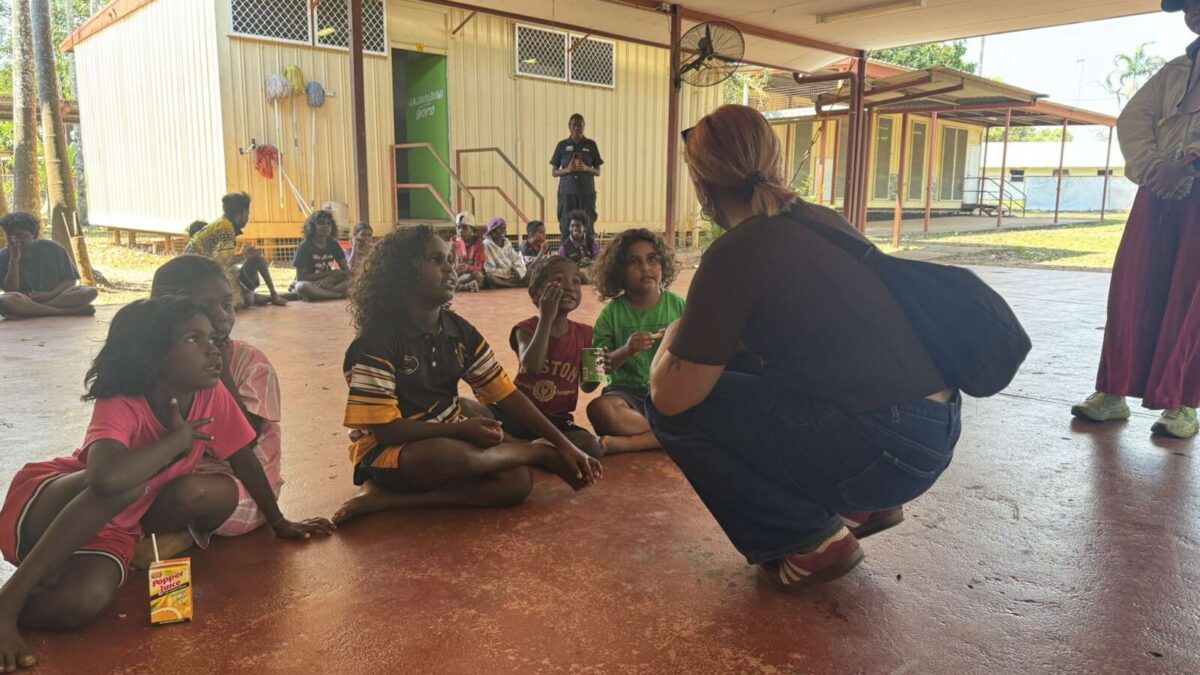
On the second day of the Tiwi visit, the delegation spent time with local artists and community members before visiting Pularumpi School.
The children had been preparing for the visit, making Aboriginal and Taiwanese flags, researching Taiwan and preparing questions for their guests. They shared songs and a reading of No Way Yirrikipayi!, before an exchange of gifts began.
As the gifts were handed out to the visitors, members of the Taiwanese delegation reciprocated with what they had to hand, including floral headdresses and sunglasses from their own heads.
For dancer Yen Kai-Hsin, it was one of the most affecting moments of the whole trip.
Growing up in the mountains of Taiwan with her grandparents, she remembered the excitement she felt as a child when visitors came to her own school.
“When I saw how happy the children were to see us, and how much they wanted to perform for us, I felt very moved,” she said. “It reminded me of myself when I was young.”
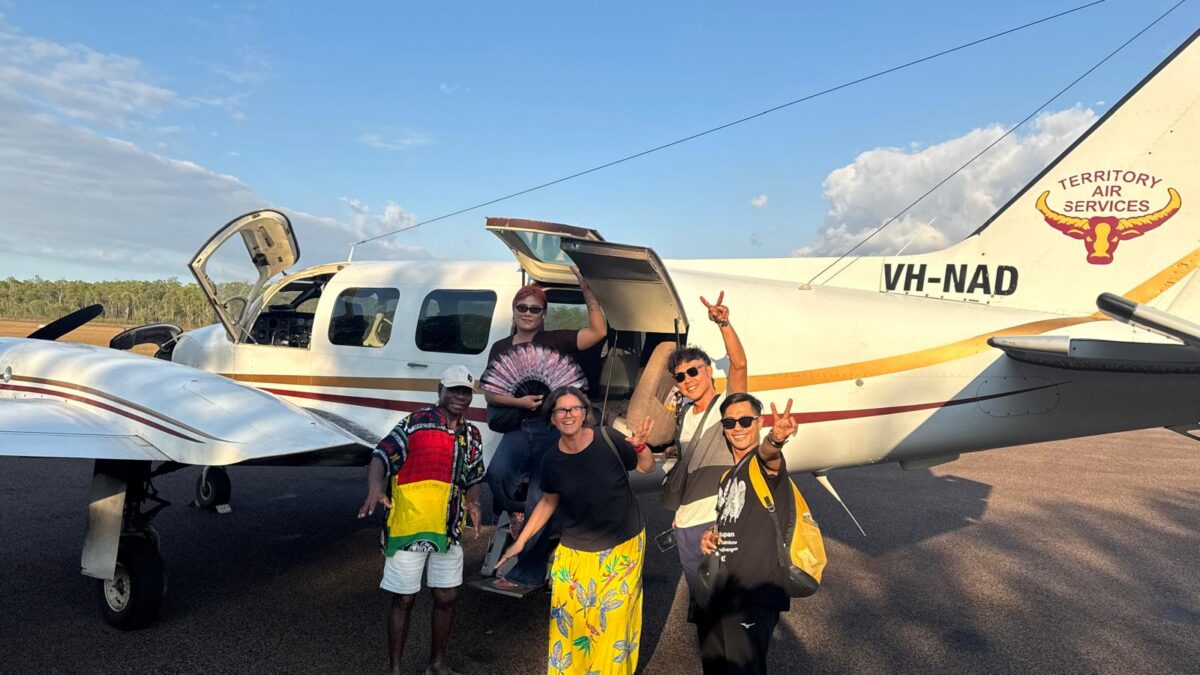
The Tiwi visit ended with another opportunity to spend time on Country, visiting a natural spring, learning about soap trees, sharing watermelon and dipping their feet into the crystal-clear water of Kulumpini before the group boarded tiny planes for the journey back to Darwin.
With many thanks to Mamanta for hosting us for this part of the trip.
Until next time
The delegation finished their visit around the table at the home of Artback NT Visual Arts Coordinator Wendy Wood, sharing food, stories, and mango daiquiris.
Reflecting on the week, Yuling said the care shown to the delegation had made the experience especially memorable.
“Artback NT has taken such good care of us and been incredibly thoughtful in the way they have hosted and supported us,” she said.
Yen felt the same.
“You have protected us and cared for us as though we were part of your own family,” she said. “My family back home is also very happy knowing that I’ve been looked after so well.”
These visits create opportunities for artists and organisations to work together, but they also make room for something less easily measured: conversations over meals, dances shared on beaches, questions asked by schoolchildren, similarities discovered between cultures and friendships built over time.
As Hsu put it:
“I hope the exchange will continue to grow, and that we’ll have even more opportunities to share and learn from one another.”